
研讀我所找到罕見Zone System和Ansel Adams相關的論文:Reinhard, E., Stark, M., Shirley, P., and Ferwerda, J.A. ”Photographic tone reproduction for digital images” Proceedings SIGGRAPH 2002,有559次引用次數。
首先要感謝台大的學姊楊惠菁在2007年「資訊與數位通訊」的期末報告,若不是她詳盡的報告內容,我可能花了一個星期也研讀不完!我的英文還有待加強:P
n 摘要:典型的攝影任務是,從真實世界的照明中潛在的高動態範圍映射到低動態範圍的相片,這也是計算機圖形從業人員所要面對色調再現的問題。此工作呈現在這篇論文中是,利用攝影實踐的時間測試技術來發展一個新的色調再現的運算子 (operator)。特別是,我們使用並擴展Ansel Adams所發展的技術來處理數位影像,由此產生的演算法很簡單,並對各式各樣的影像產生良好的結果。

Linear Map vs New operator
n 介紹:光的亮度範圍:星光照射的場景到日光照射的雪大約橫跨十個order,一個場景裡的shadows到highlights超過四個order。然而在相片和螢幕顯示器上大概只有兩個order,這導致了tone reproduction的問題:我們應該如何映射(map)、估量(mesure)、模擬(simulate)場景的亮度(luminance)來產生滿意的影像?
使用感知模型是一個健全得方法來處理tone reproduction問題,而且可能導致有效的不干涉演算法hands-off algorithms,有兩個問題存在於目前得模型:第一,現在的模型通常會招引artifact像是ringing或clamping;第二,視覺表象不只是依賴對比與亮度,場景內容、影像媒介、觀看條件一定需要考慮。我們轉向攝影的作法取得靈感,引導我們發展tone reproduction技術應用在變化多端的影像,包括有著非常高的動態範圍影像。
n Zone system:提供一個如何從scene zones的亮度map到print zones的方法。首先攝影師先用肉眼讀取場景中亮度為中間值的亮度,該亮度將會map到print zone V。Print zone V typically corresponds to the 18% reflectance of the print.然後攝影師再次用肉眼讀取場景中亮度最亮及最暗的地方來決定該場景的dynamic range有多大。如果該dynamic range沒有超過11個zones,我們就可以將所有的scene zones map到print zones上而沒有失去任何場景中的細節。但當場景的dynamic range比11個zones還要多的話,就需要dodging-and-burning的方法來幫助我們作map的工作。

從scene zones映射至print zones。如果scene zones超過11個,超過的部份不是映射到純黑,就是映射到純白。
n Dodging-and-burning:洗照片的時候,常常必須將某些過亮的地方刪去一些亮度,或將一些過暗的地方增加一些亮度,以使整張照片洗出來更好看。將亮度減少的動作就叫作dodging;將亮度增加的動作就叫作burning。若我們只用兩種方法的其中一種來洗照片,如只用dodging,則整張相片會變暗;相反的,若只用burning來洗相片,則整張相片會變亮。
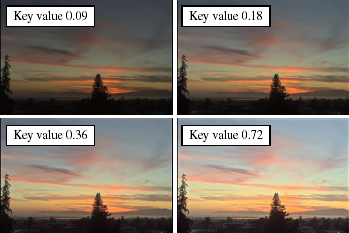
n luminance Mapping:先將真實場景中每一點的亮度取log,然後算出其平均值,再取exp轉回亮度值,以此來近似the key of the scene。如果影像是normal key,顯示到螢幕上時,我們則將此平均map到0.18 reflectance of the print,但如果影像是low key,我們則把它map到比0.18大的值,讓該較暗的影像map到螢幕的zones時,可以亮一點,反之,若影像是high key,則相反。我們可以看到,當key value 愈大,整張圖成愈亮;當key value愈小,整張圖會愈暗。
n 對於高動態範圍的影像有著低對比區域,這個壓縮高亮度範圍到低亮度範圍顯示器上可以保留細節,但對於高動態範圍有著高對比區域,我們將遺失許多重要的細節,因此就需要dodging-and-burning來實現local tone reproduction的演算法,將過亮的區塊變暗,將過暗的地方變亮,以避免失去掉細節。

simple operator vs local dodging-and-burning operator
n Automatic dodging-and-burning:為了實現the local dodging-and-burning operator的方法, 我們可以對每一個pixel都選擇不同的key value。為每一個pixel根據它周圍local region的資訊,找一個屬於它的key value值。在這裡,local region的定義是:給定一個pixel,找一個最大的區塊,使得區塊裡面的每個點的亮度都差不多,在該區塊沒有發生「大的對比改變」,此區塊即為local region。
若有一個較暗的pixel在較亮的背景區塊中,display luminance的值,因此為此pixel與其背景增加了對比,這就是「dodging」。同樣的,若有一個較亮的pixel在較暗的背景區塊中,所以將會增加display luminance,這就是「burning」。

Left: center and surround at different scales.
Right: The result of particular choices of scale selection.
右圖中Scale too small可稱作clamping,Scale too large則可稱作ringing。
n 作者與過去研究者的方法作比較:
- Stockham’s homomorphic filtering Using the observation that lighting variation occurs mainly in low frequencies and humans are more aware of albedo variations, this method operates by downplaying low frequencies and enhancing high frequencies [Oppenheim et al. 1968; Stockham 1972].
- Tumblin-Rushmeier’s brightness matching operator . A model of brightness perception is used to drive this global operator. We use the 1999 formulation [Tumblin et al. 1999] as we have found it produces much better subjective results to the earlier versions [Tumblin and Rushmeier 1991; Tumblin and Rushmeier 1993].
- Chiu’s local scaling A linear scaling that varies continuously is used to preserve local contrast with heuristic dodging-andburning used to avoid burn-out [Chiu et al. 1993].
- Ward’s contrast scale factor A global multiplier is used that aims to maintain visibility thresholds [Ward 1994].
- Ferwerda’s adaptation model This operator alters contrast, color saturation and spatial frequency content based on psychophysical data [Ferwerda et al. 1996]. We have used the photopic portion of their algorithm.
- Ward’s histogram adjustment method This method uses an image’s histogram to implicitly segment the image so that separate scaling algorithms can be used in different luminance zones. Visibility thresholds drive the processing [Ward et al. 1997]. The model incorporates human contrast and color sensitivity, glare and spatial acuity, although for a fair comparison we did not use these features.
- Schlick’s rational sigmoid This is a family of simple and fast methods using rational sigmoid curves and a set of tunable parameters [Schlick 1994].
- Pattanaik’s local adaptation model Both threshold and suprathreshold vision is considered in this multi-scale model of local adaptation [Pattanaik et al. 1998]. Chromatic adaptation is also included.
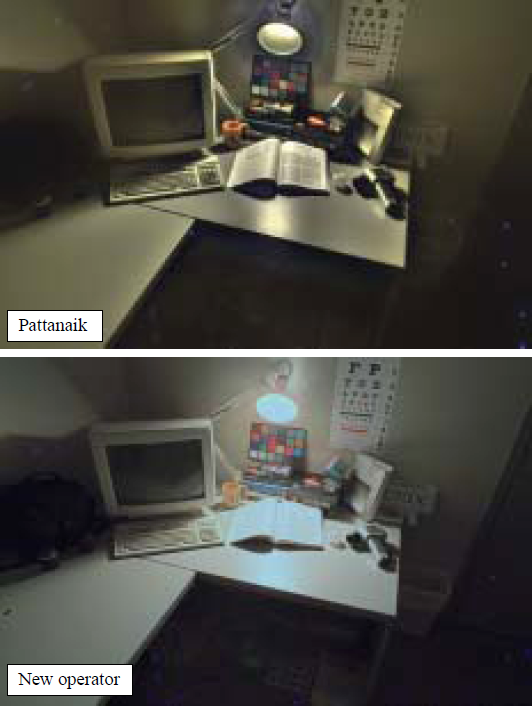
Desk image (dynamic range is 15 zones).
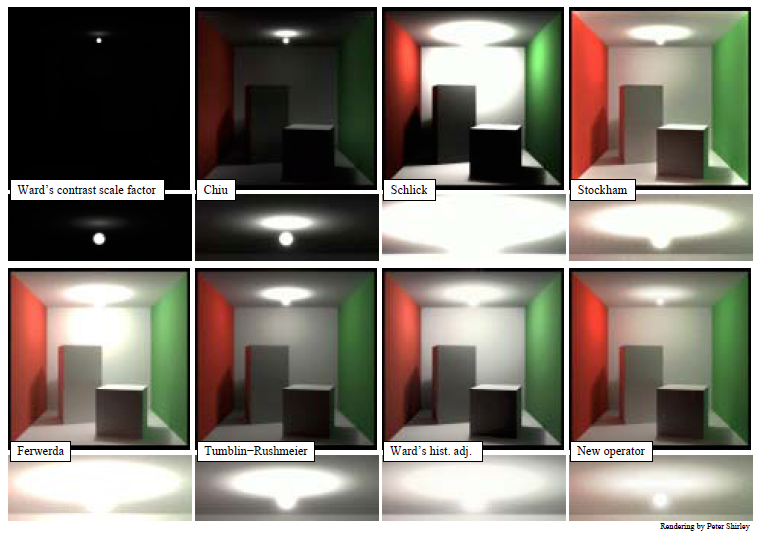
Cornell box high dynamic range images including close-ups of the light sources. The dynamic range of this image is 12 zones.
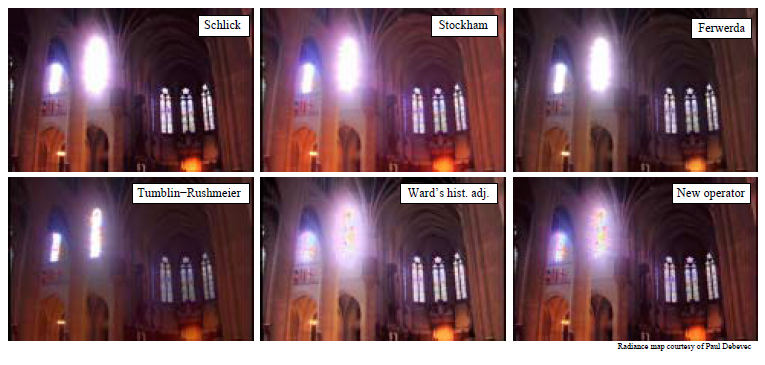
Nave image with a dynamic range of 12 zones.
n 總結:攝影師目標在壓縮場景的動態範圍來產生令人滿意的影像,藉由150年來的攝影經驗來發展相對簡單且迅速的tone reproduction演算法來處理數位影像,它被設計來遵循實務而且因此非常適合拿來應用,創造主觀上的滿意和沒有潛在artifact的影像。
n 結果:
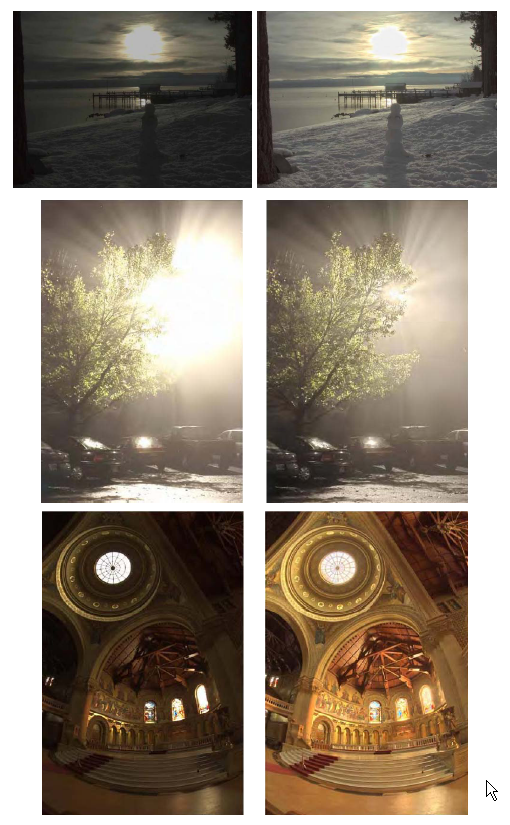
Left : original picture.
Right: result picture after using the local tone mapped operator.
感想:原本跟老闆討論要作自動偵測影像哪區需要提高亮度、哪區需要降低亮度,結果這paper已經做得很出色!我只好另找色調相關來作風格轉換研究。


 逍遙文工作室
Comments on: "[paper] Photographic Tone Reproduction for Digital Images" (3)
[…] Photographic Tone Reproduction for Digital Images […]
讚讚
[…] and Burning的一部分我已在Photographic tone reproduction for digital images提過,在此想要針對這兩個動作做深度探討。雖然Dodging and […]
讚讚
[…] 上週研究了這篇論文,但一直忘了給它整理好,所以今日趁著內容還沒淡忘之前,把它給記錄下來。Fast Bilateral Filtering for the Display of High-Dynamic-Range Images這篇論文在SIGGRAPH 2002發表,目前有623引用次數,是著名HDR論文三篇中其中一篇,另外兩篇如我之前已研讀過:Photographic Tone Reproduction for Digital Images和Gradient Domain High Dynamic Range Compression。 […]
讚讚